I work in the gap between what medicine can see and what the system will pay for.
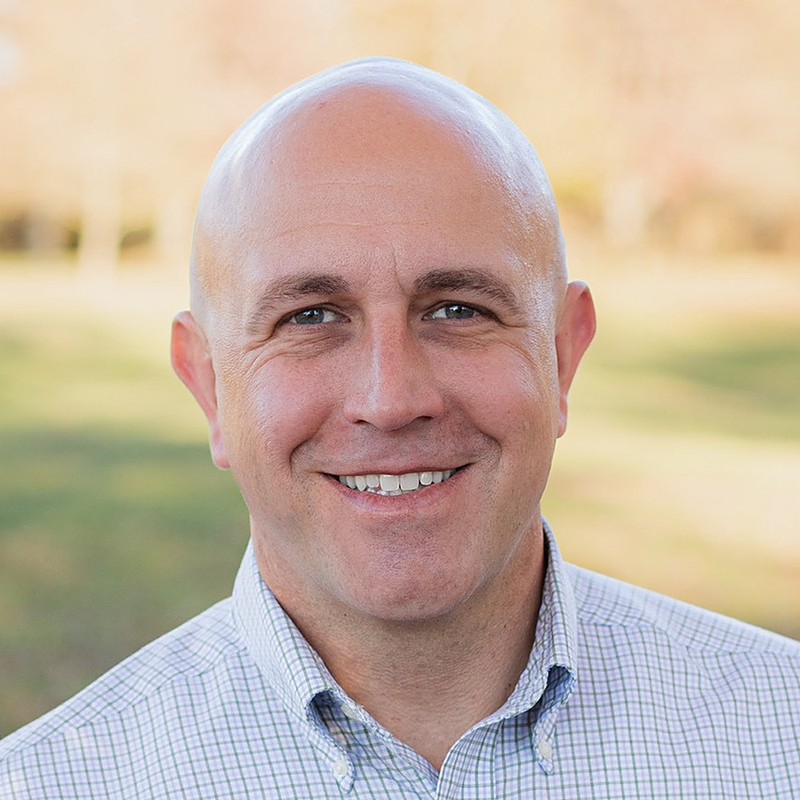
I am a clinician-executive. I have practiced at the bedside, run transformation inside a health system, traced the fault lines in utilization management inside a health plan and shaped the roadmap that followed, and built the operating model that carried an AI-guided diagnostic service to national scale and an acquisition.
Provider side, payer side, industry side. The same problem looks different from each one, which is the entire reason I can see it.
States reached, scaled from 11 in two years
Members in the payer enterprise I helped transform
Peer-reviewed publications, 30+ national presentations
Series B exit, Caption Health to GE HealthCare
The recognition gap
Medicine keeps learning to see more. The system that pays for care cannot recognize most of it.
A 2022 guideline redefined Stage B heart failure and asked clinicians to catch structural disease before decompensation. The vocabulary they have to document it in still traces to 2013. The at-risk patient maps to no risk weight, and the codes that do carry weight assert a heart failure the patient does not yet have. Clinicians can now compute a cardiovascular risk score that the payer adjudicating the claim has no way to process.
That is the gap I work in, and it is everywhere once you know to look. Clinical capability exists and the reimbursement infrastructure does not. Value contracts change upstream and the incentive never arrives at the point of care. An entire sector adopts care pathway language without building the coordination that language implies.
The system cannot pay for what it cannot recognize. Naming that gap is the easy half. I have also built the thing that closes it.
At Caption Health, the product was cleared and clinically valid and still had no route to a patient, because no one pays a device to exist. So we built an operating model around it, an MSO-PC structure that turned a diagnostic product into a commercially offered clinical service. That structure is what made national scale possible, and it is what anchored the acquisition.
I write about this pattern continuously. It runs through a growing body of research across payer mechanics, imaging, cardiovascular care, pharmacy economics, and quality measurement.
Bedside to war room to boardroom
At the bedside
Cardiothoracic critical care. I managed anticoagulation and mechanical circulatory support, and wrote the guidelines the rest of the hospital followed. Clinical credibility is not a credential you cite. It is whether the room settles when you start talking.
In the war room
Bundled payments. An ACO built from nothing. Utilization management for millions of members, where the work was finding where capability and data standards diverge and pointing the roadmap at the gap. This is where you learn that most healthcare strategy dies in the space between what a contract promises and what a workflow will tolerate. I built in the record itself rather than describing it in a deck, which is a different kind of knowing.
In the boardroom
A cleared device with no route to a patient, turned into a commercially offered clinical service, scaled nationally, carried through an acquisition. Different vocabulary. Same problem.
I move between those rooms without translation. That is the whole of it.
One thing worth naming, because it is rarer than the rest. Medical affairs and commercial are normally separate functions with separate leaders and real tension between them. Evidence gets built that does not answer the buyer's question, and commercial teams make claims the evidence cannot defend. I have run both, at the same time, inside a regulated manufacturer. Doing that compliantly is the part people underestimate.
Where that gets applied
- Market access and reimbursement
- Utilization management and prior authorization
- Integrated evidence planning
- Medical affairs and commercialization
- Value-based care and bundled payments
- AI diagnostics and SaMD
- Clinical decision support
- Interoperability and EHR architecture
- Coverage policy and coding strategy
- Payer economics
How I got here
Education

BS, Biology
Marshall University

PharmD
West Virginia University

MBA
The Ohio State University
The path

Clinician first
The Ohio State University Wexner Medical Center, and UPMC
Cardiothoracic surgery and critical care pharmacy. I authored institutional guidelines on anticoagulation, ECMO, and therapeutic hypothermia, and published across critical care and cardiovascular medicine. This is where the clinical credibility comes from, and I kept practicing in the ICU until 2018.
Clinical Transformation Officer
The Ohio State University Wexner Medical Center
Built and led a transformation office across a seven-hospital academic medical center. Ran clinical and financial execution for 40+ Ohio Medicaid episodes and BPCI cardiac bundles, generating close to $1M in shared savings on cardiac surgery, and stood up the MSSP Track 1 ACO. This is where I learned what providers can actually absorb.

Director of Clinical Transformation
Highmark Health
Payer-provider transformation inside a vertically integrated enterprise serving 5.6 million members. Led utilization management and prior authorization strategy and roadmap evaluation, assessing the platform landscape and mapping where vendor capability diverged from data standards. Established enterprise clinical decision support governance, retiring 25 low-value alerts that fired more than 8 million times a year and replacing them with 40 precision alerts. This is where I learned why coverage says no.


Vice President, Clinical Strategy and Innovation
Caption Health, then GE HealthCare
Recruited to architect the clinical, regulatory, and commercial strategy that led to a Series B exit. Led the shift from a standalone AI product to an AI-enabled diagnostic services model, built global Medical Affairs and RA/QA teams, and served as executive sponsor for a $5M Gates Foundation grant on AI-guided lung ultrasound. Retained post-acquisition and scaled the service from 11 to 44 states with six consecutive quarters of ARR growth.

Founder and Principal
OneAnother Health, LLC
Advisory work for MedTech, digital health, biopharma, and value-based care organizations on reimbursement strategy, evidence architecture, and commercialization. Contributor to the Digital Medicine Society's Integrated Evidence Plan frameworks, and a member of the Ventric Health advisory board.
Credentials and recognition
Education and certification
- MBA, Fisher College of Business, The Ohio State University
- PharmD, School of Pharmacy, West Virginia University
- BS, Biology, Marshall University
- Epic Certified Physician Builder, Analytics
- Registered Pharmacist, Ohio State Board of Pharmacy
Recognition
- WVU School of Pharmacy Hall of Fame, 2024 inductee, fewer than 5% of roughly 4,000 alumni across 110 years
- GE HealthCare CEO Award, Delivering the Future of Healthcare, 2024
- GE HealthCare Impact Award, Ultrasound and Digital, 2023
- USPSTF nomination submitted for echocardiography screening in heart failure
- Contributor, DiMe Integrated Evidence Plan frameworks and HLTH Foundation case study
Short bio
For conference programs, podcast show notes, and introductions. Written in third person, ready to use as-is.
Speaker bio, 120 words
Erik Abel, PharmD, MBA is a healthcare transformation executive and founder of OneAnother Health, LLC. He works in the gap between what clinical science can identify and what the healthcare system can code, adjudicate, and pay for.
He served as Vice President of Clinical Strategy and Innovation at Caption Health and then GE HealthCare following its acquisition, where he built the operating model behind an AI-guided diagnostic service and scaled it from 11 to 44 states. Earlier he led utilization management strategy and care transformation at Highmark Health, serving 5.6 million members, and served as Clinical Transformation Officer at The Ohio State University Wexner Medical Center.
He has authored more than 40 peer-reviewed publications, delivered more than 30 national presentations, and was inducted into the West Virginia University School of Pharmacy Hall of Fame in 2024.
Need a shorter version or topic descriptions? See speaking and media.
Working on something in the gap?
I take a small number of advisory engagements, board seats, and speaking invitations each year.
Start a Conversation Read the Research